Learn more
How to Maximize Utilization and Protect Your CapEx in Industrial Automation
Resources

How to Maximize Utilization and Protect Your CapEx in Industrial Automation

In high-mix manufacturing, determining if a capital investment is truly worth it comes down to realizing rapid ROI and maximizing system utilization. To protect CapEx and ensure long-term value is delivered, the robotic workcell deployment lifecycle needs to be built for continuous adaptation. Discover our three-layer blueprint: combining embedded on-site engineering, continuous monitoring and self-reporting, and proactive support designed to keep your industrial automation systems engineered for uptime.

September 8, 2026

For most manufacturers, the traditional robotic integrator model is fundamentally misaligned with the realities of the modern factory floor. According to the US census bureau, Manufacturing Industrial Robotic Equipment: 2022 Economic Census, only about 6% of U.S manufacturers have adopted robotics. A primary barrier is the fear of rigid, inflexible capital expenditures.

In traditional automation, the defining metric of a successful deployment is the Site Acceptance Test (SAT). An integrator builds a robotic cell in their facility, performs a Factory Acceptance Test (FAT) with a subset of standard parts, repeats this on the customer shop floor as part of the SAT, secures a signature, and hands over the manual. However, in reality, the factory floor is highly dynamic. Ambient lighting shifts, compressed air pressure fluctuates, and upstream manual processes introduce variations and unpredictable environmental fluctuations. Treating the deployment as a one-time event to hit the SAT metrics locks the workcell into a set of assumptions; the moment the physical environment deviates from the test conditions, the system faults, resulting in downtime and bringing the production line down with it.

We at Cohesive Robotics measure a system’s successful deployment by its continuous, uninterrupted utilization. Here is the three-layered blueprint of how we approach robotic workcell deployment, deliver proactive support services and achieve an under-18 month return on investment. 

Introducing the Forward Deployed Engineer (FDE)

Standard robotic commissioning typically culminates in an intense SAT, followed immediately by a brief operator training session before the integration team departs. The condensed training often overloads operators with new information while failing to capture the intricacies of daily production. Furthermore, it leaves no room for the robust testing required during the critical first few weeks of system ramp-up to identify edge cases and resolve process-specific bugs.

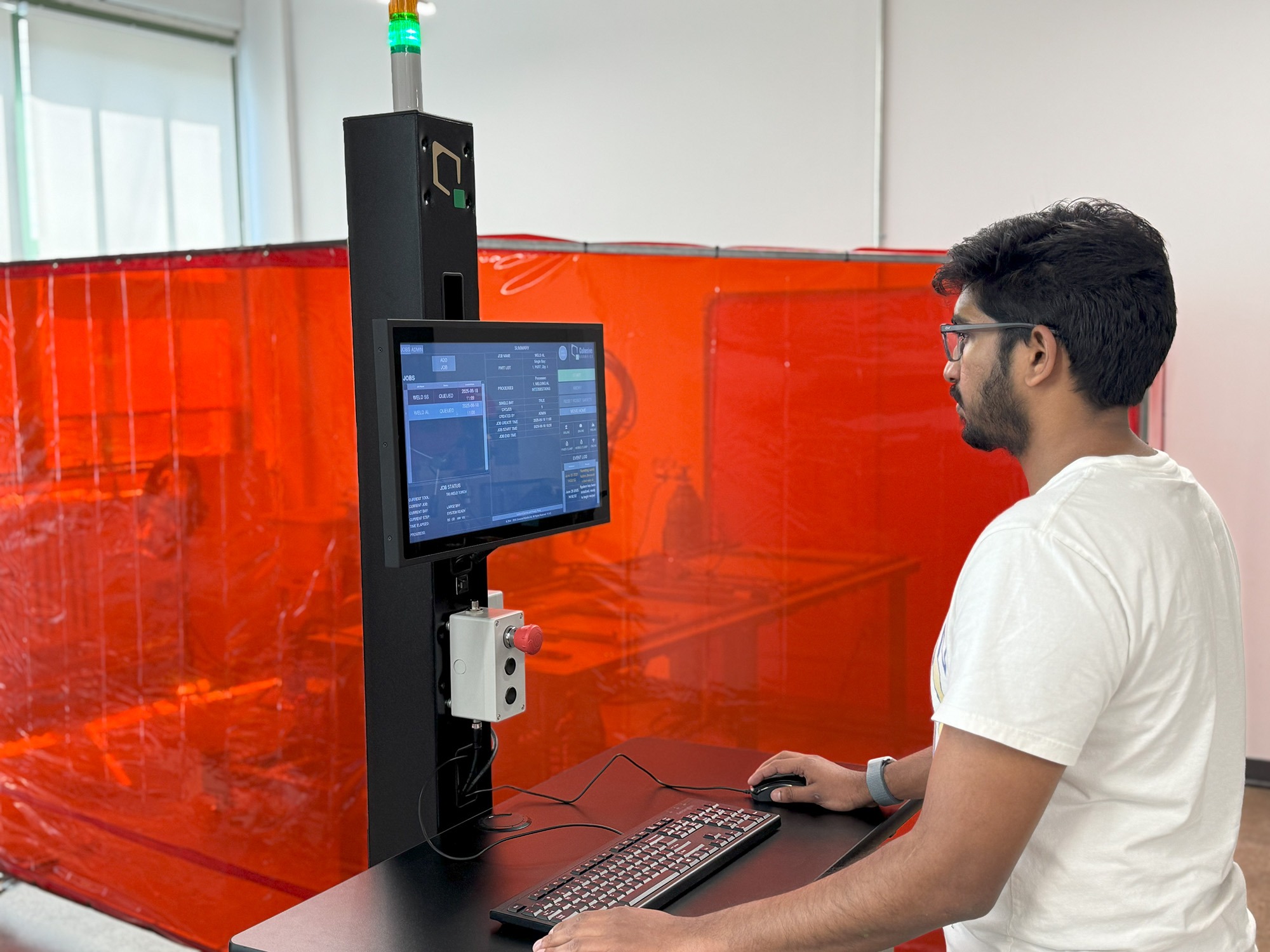
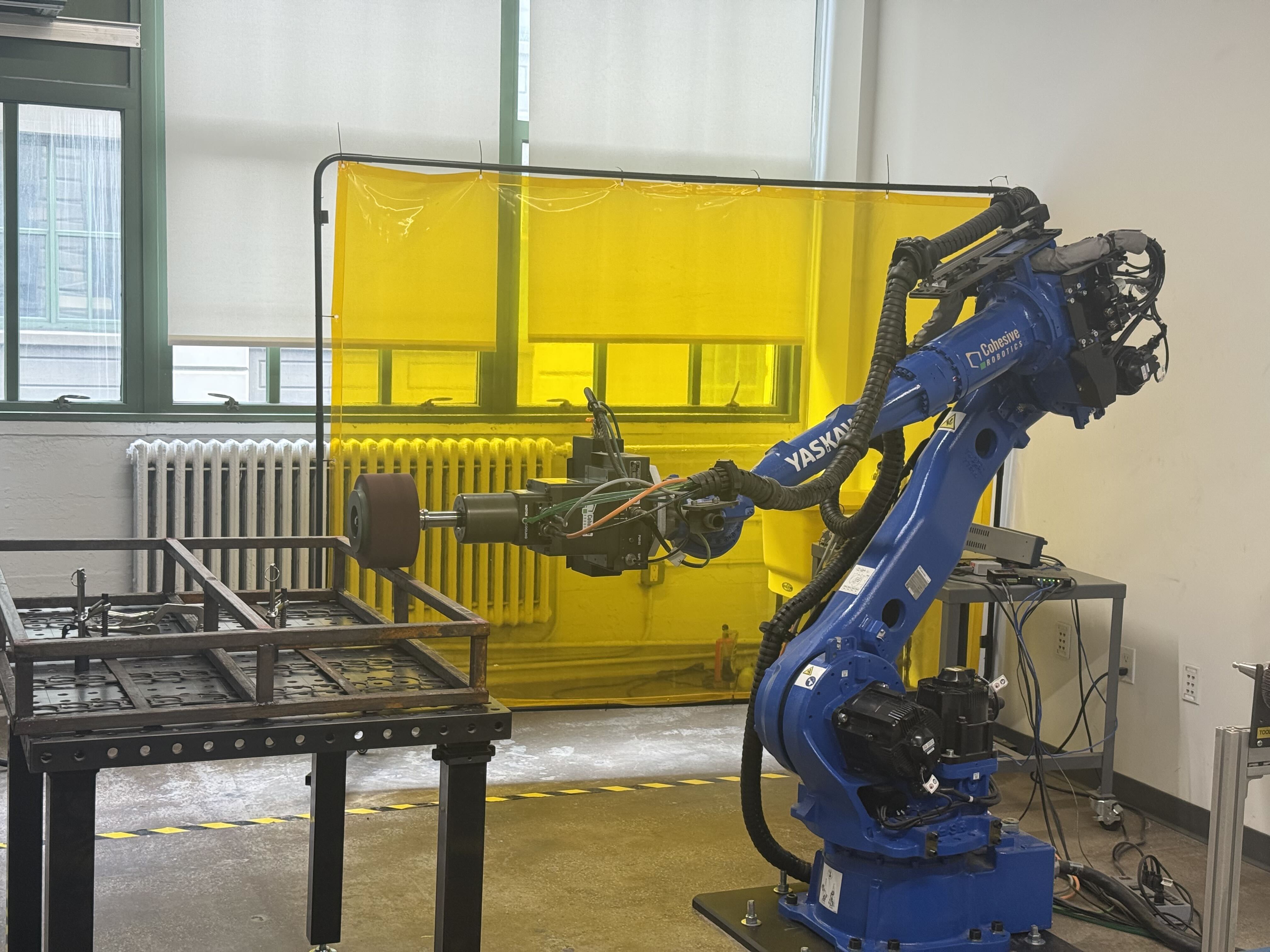
Figure 1: One of our FDE’s fine-tuning a Smart Welding Robotic Workcell

To solve this, Cohesive Robotics utilizes a fundamentally different approach by embedding a Forward Deployed Engineer (FDE) on the factory floor for an extended period of up to 3 weeks post-SAT deployment. Serving as a hybrid of a field engineer and an on-site technician, the FDE acts as a technical liaison, bringing the best of both skill sets to ensure our Smart Robotic Workcells perform exactly as intended in real-world production environments.

Rather than simply teaching operators on the shop floor how to operate a system, this extended integration phase focuses on fine-tuning to ensure system utilization is maximized. This includes tasks such as calibrating the 3D vision system to the factory’s lighting conditions, setting abrasive tracking parameters based on production usage, teasing out edge cases, fine-tuning control algorithms, improving cycle time and most importantly making operators on the field comfortable to use the system. 

This guarantees the system adapts to the facility, ensuring that when variations ultimately end up occurring, the workcell remains robust and fully operational.

Proactive Monitoring to Stop Downtime Before It Starts

If the FDE represents the Stage I of our deployment blueprint, advanced monitoring and telemetry serve as the Stage II defense layer for maintaining uptime. This layer extends long after the initial post-SAT ramp-up.

In a traditional workcell, diagnosing a fault relies on an operator’s vigilance and manual intervention. Waiting for an operator to identify an issue, step away to report it, and manually open a support ticket requires too much effort. Faced with production quotas and the scrutiny that accompanies machine downtime, operators will frequently bypass a stalled workcell to finish parts manually or come up with substandard workarounds. This not only erodes trust in the system but ultimately defeats the core purpose of the capital investment. To eliminate this bottleneck, Cohesive Robotics has completely automated the support and reporting pipeline, enabling workcells to proactively self-report.

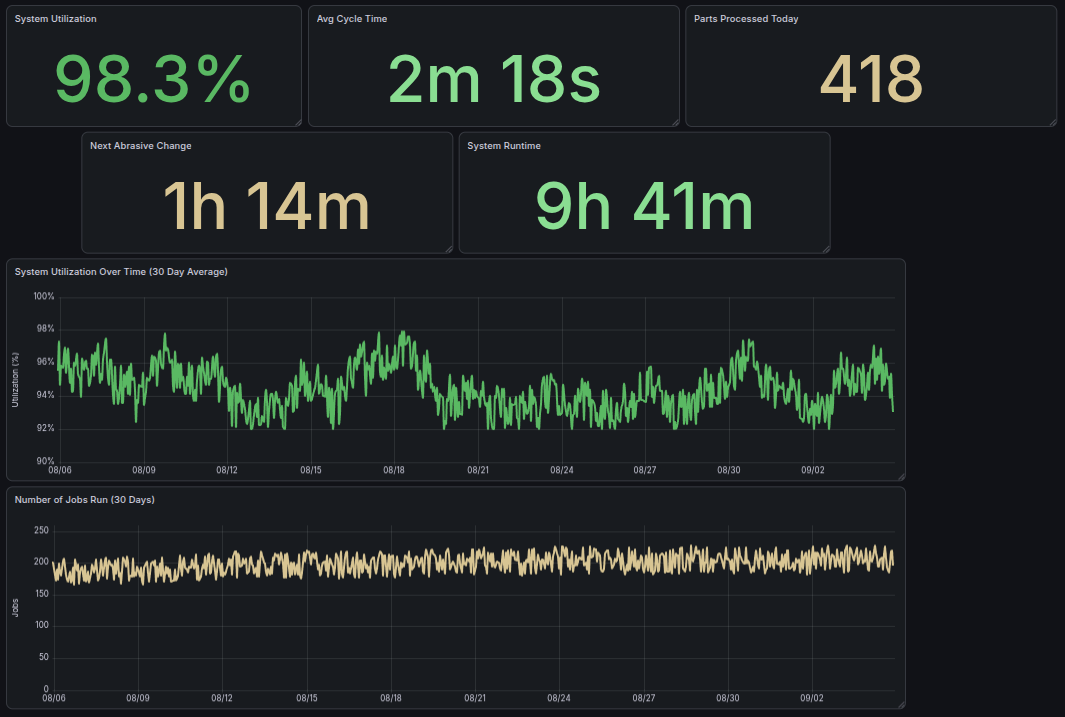
Figure 2: Argus OS Metrics Dashboard

Argus OS constantly aggregates operational data, such as unit cycle times, tool wear, spindle motor loads, and air pressure. The system analyzes this data locally, allowing it to make  instantaneous path-planning adjustments without relying on factory internet connectivity.

Simultaneously, this data streams to a secure cloud-based alerting pipeline. If the system encounters a "Machine-Blocked Condition", a state where the robot cannot safely proceed without intervention, the local controller instantly pushes an alert to the Cohesive Robotics remote engineering team which includes crucial information such as error code, machine state, and logs. With this architecture, our support engineers can diagnose anomalies remotely within 15 minutes, often before the facility's floor manager is even aware of the stoppage.

Life Beyond Commissioning: Continuous Support and Lifecycle

The most dangerous period in the lifecycle of an automated system is the window between Day 30 and Day 90. The Site Acceptance Test is complete, the system has been officially signed off, and the initial deployment is deemed a success. However, when a minor collision occurs, a sensor drifts out of alignment, or a new part SKU must be introduced, a traditional static system inevitably halts. Facility managers are left attempting to decipher technical documents or complex robot programs and coordinate external support schedules while production stalls. All too often, operators revert to manual processing out of frustration to meet production quotas, rendering a six-figure capital investment completely non-functional.

The Stage III layer of our deployment blueprint is our Cohesive Care+ support plans. We treat Day 30 as the baseline for performance, not the finish line. The post-deployment lifecycle is managed continuously through tiered support plans designed to manage both the physical and digital health of our systems, ensuring maximized utilization year over year.

Our Care+ Essentials plan is included with every deployment. It leverages the telemetry pipeline to provide priority remote monitoring and assistance, continuous AI model refinement and active learning, OTA (Over-The-Air) software updates, and actionable monthly reporting. We also provide annual on-site operator training refreshers to mitigate workforce turnover.

Our Care+ Premium caters more towards high-throughput, multi-shift facilities. In addition to all services in our essential plan, we provide  24/7/365 hotline escalation for immediate anomaly resolution, comprehensive quarterly on-site preventative maintenance and extended warranties on the hardware.

Conclusion: The Blueprint for Lifelong System Utilization

Purchasing a robotic workcell for a high-mix environment is not a one-time capital transaction; it requires a proactive operational strategy to prevent the system from sitting idle on the shop floor. Our 3 layer deployment blueprint eliminates this risk by:

  • Deploying an FDE on-site after SAT for a period of up to 3 weeks for system refinement and model tuning.
  • Proactively self gathering and reporting issues and anomalies, thereby removing the burden from the operator.
  • Utilizing Cohesive Care + for continuous software updates, AI model updates, ensuring system longevity and maximizing throughput over time.

High-mix manufacturing demands flexibility while keeping up with production demands. At Cohesive Robotics, uptime is engineered directly into the post-deployment lifecycle. Our  involvement does not end at the SAT; it begins there.

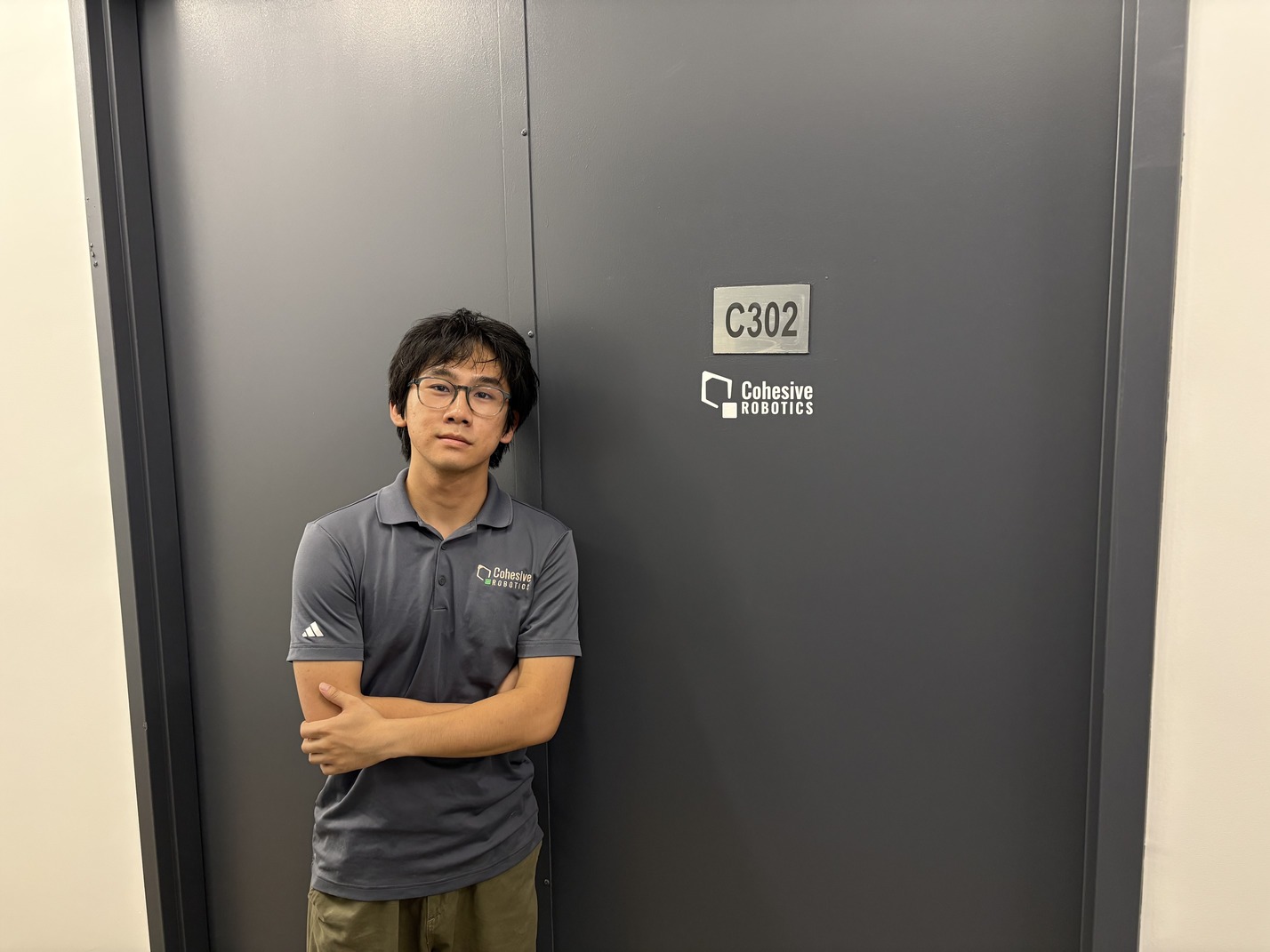
ABOUT THE AUTHOR

Enjoyed this read?

Stay up to date with the latest Cohesive Robotics news, automation strategies, and insights sent straight to your inbox!

Almost done! Check your email to verify signup.
Oops! Something went wrong. Please try again.