Learn more
Building Smart Robotic Workcells That Learn and Adapt with Every Shift

Building Smart Robotic Workcells That Learn and Adapt with Every Shift

Traditional robotics fails in high-mix environments due to rigid pre-programming. Discover how Cohesive Robotics uses Physical AI to replace complex waypoint programming through a teach pendant. They also offer an intuitive, 10-minute operator workflow for retaining without any system downtime - slashing setup time, cutting scrap by 90%, and boosting production throughput by over 50%.

August 10, 2026

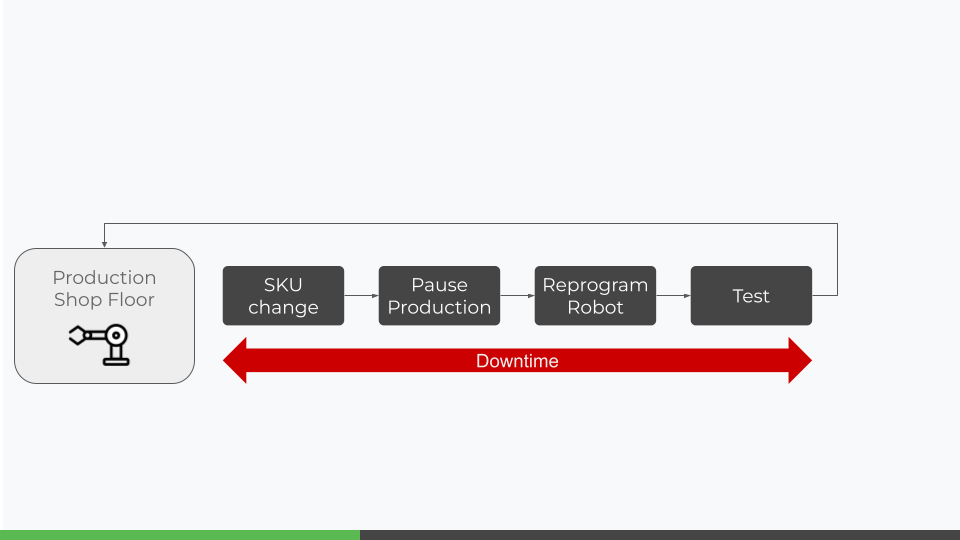
Automation and robotics in the past have been well suited for static environments with mass production. These systems rely on precise, rigid fixturing and identical parts to produce at high volumes with a high throughput. They cannot adapt to even minor changes such as thermal shrinkage, placement errors or dimension distortions. They require specially trained and skilled engineers spending days or weeks manually programming the systems with a teach pendant teaching the robot each motion to perform.

In contrast, manufacturing in a high-mix environment is economically unfeasible for traditional automation and robotics. High-mix manufacturers deal with an ever changing portfolio of varied geometries, materials, and processes. The inflexible and rigid pre-programmed approach will result in stopping production and manually re-teaching robot motions each time there is any variation in part, process or environment. This completely kills productivity and often wipes out ROI justifications for adopting automation. For small and medium-sized manufacturers, which constitutes over 80% of all manufacturing, this becomes even more pronounced.

Enabling robotics in high-mix environments requires shifting automation from rigid pre-programming to a Physical AI-driven learning framework.

Why is Physical AI Ready Now?

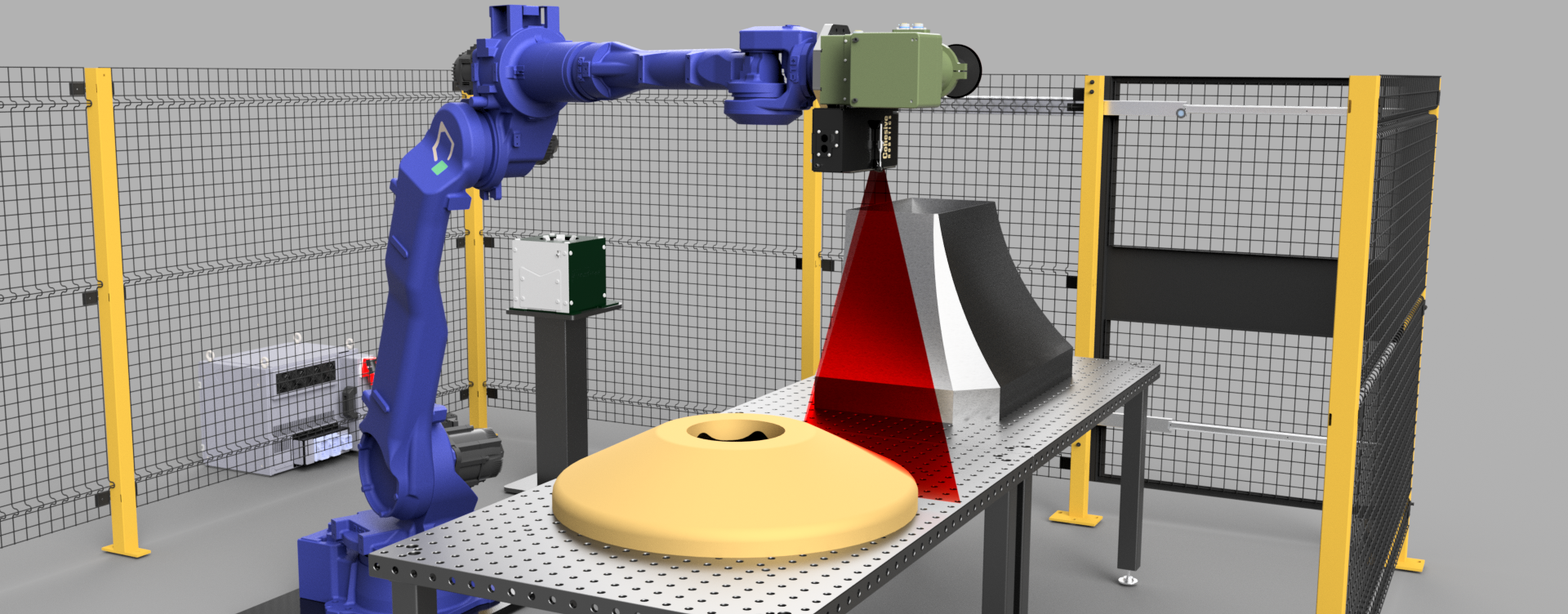
At Cohesive Robotics, we solve this with our proprietary software, Argus OS. A core component of Argus OS is our Scan-to-Path framework, which completely replaces waypoint teaching and manual robot programming with adaptive visual intelligence. Added to this is our sophisticated framework to keep AI models continuously updated, and learning with each job that runs. Scan-to-Path allows Argus OS to perceive the part in the work area, generate toolpaths and a corresponding program for the robot to execute to process the part, all on the fly. 

To achieve this out-of-the-box ability, our perception stack leverages Vision Models (such as YOLO) that we have trained on petabytes of data containing diverse images and videos. This enables the model to use pretrained visual representations and semantic feature embeddings to recognize physical structures such as a “surface”, “edge”, "seam" or “intersection”. Traditional computer vision relies on rigid rules, pixel memorization, filter tuning to detect features. Conventional AI models need to learn e4  ach feature, or surface from scratch requiring thousands of data points each time.

Unlike those methods, our model uses a minimal set of samples (10-50 samples) to align through few-shot domain adoption, its pre-existing knowledge with the specifics of the environment and application at hand. This re-training is what allows our system to quickly adapt, and adjust to variability in high-mix environments with downtime measured in minutes, not days or weeks.

How to train a robot in a few minutes?

When an unseen part or feature is introduced, we establish a robust baseline for our model using approximately around 50 samples and 30 minutes of training. This is the mathematical "sweet spot", allowing the model to capture normal surface and geometric variations across structurally related components.

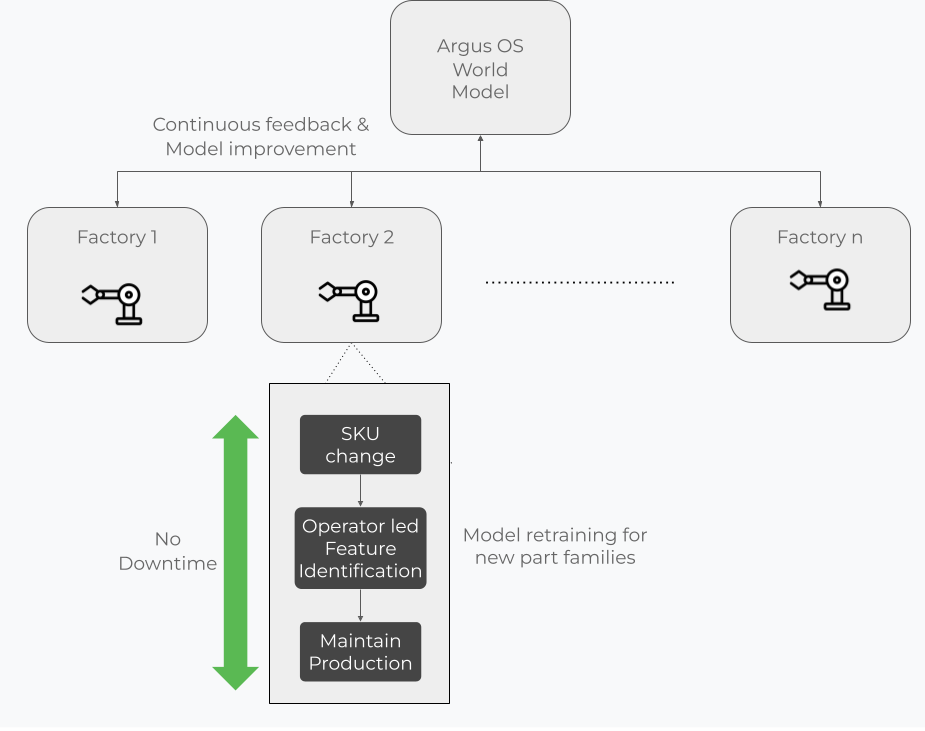
Once that baseline is seeded, the system is highly adaptable. If a design variation is introduced within the same part family, the model is retrained using 8 to 10 samples. The model gets retrained in a few minutes, and the system uses the new model directly without the need for any software or configuration change.

This re-training process involves a shopfloor operator marking the area, feature or surface of interest using a standard paint pen, and the robot scanning the work area with a 3D camera. Our perception model, without any prior knowledge of that specific geometry is able to segment that region and add the data point for re-training. The system then generates a sub-millimeter precision robot path to process the drawn contour. The operator does not need to know G-code or complicated teach-pendant programming or spend hours re-teaching waypoints. They simply "draw" the task, and the robot understands the task at hand and executes the required motion.

The biggest advantage of this workflow is that there is no downtime to production - With an extra step of the operator helping the system recognize the feature, the system continues to produce parts.

Traditional automation cells are frozen in time on the day they are commissioned. Contrary to this, all our systems are constantly gathering data as each part gets processed - 3D scans, camera images, robot positions, temperatures, tool wear, forces, speeds, process parameters, and more. This data is fed back into our process models continuously refining the underlying AI’s understanding of material behaviors, surface finishes, geometric tolerances and manufacturing processes.

This closed-loop retraining cycle ensures that the system rapidly converges on optimal parameters for novel parts while holding tighter tolerances on familiar ones over time. This systematic process prevents model performance degradation and ensures Argus OS’s perception stack adapts to long-term shop-floor variations.

The more our robots run, the smarter our systems and models get.

How Accurate and Reliable Is Physical AI in Unstructured Factory Environments?

Our models are able to generalize across various physical attributes such as materials (aluminum, stainless steel, pre-polished brass, wood, plastics), Lighting conditions (Different lighting conditions at different times of day, in different factories), specular conditions (Shiny surfaces, coarse matte surface), and other physical factors that change at each factory or new environment. With traditional computer vision, these changes would cause system failures resulting in downtime while the filters need tuning, or the rules for detection need to be updated. 

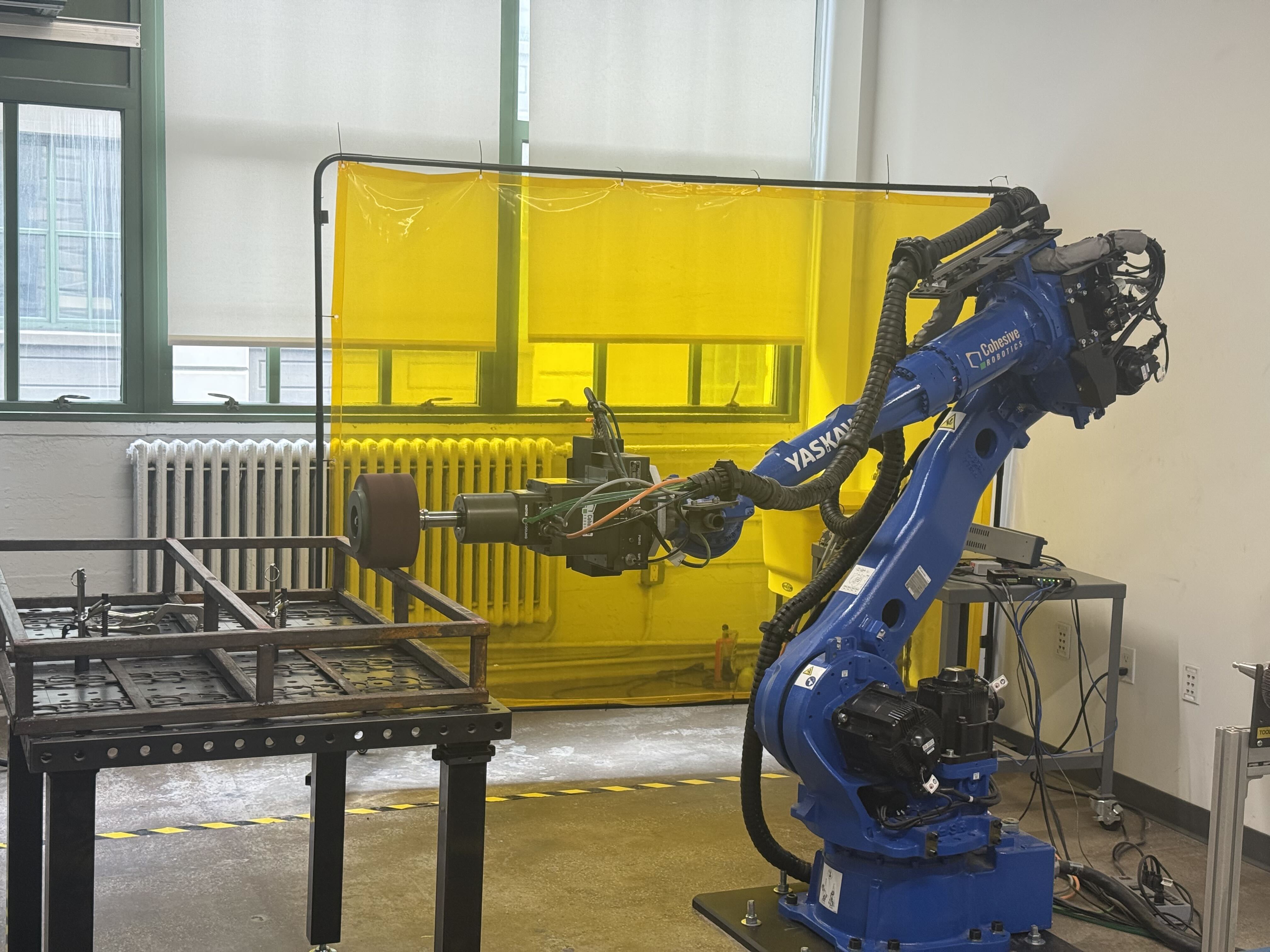
A few examples of the versatility of our model are shown below. The im

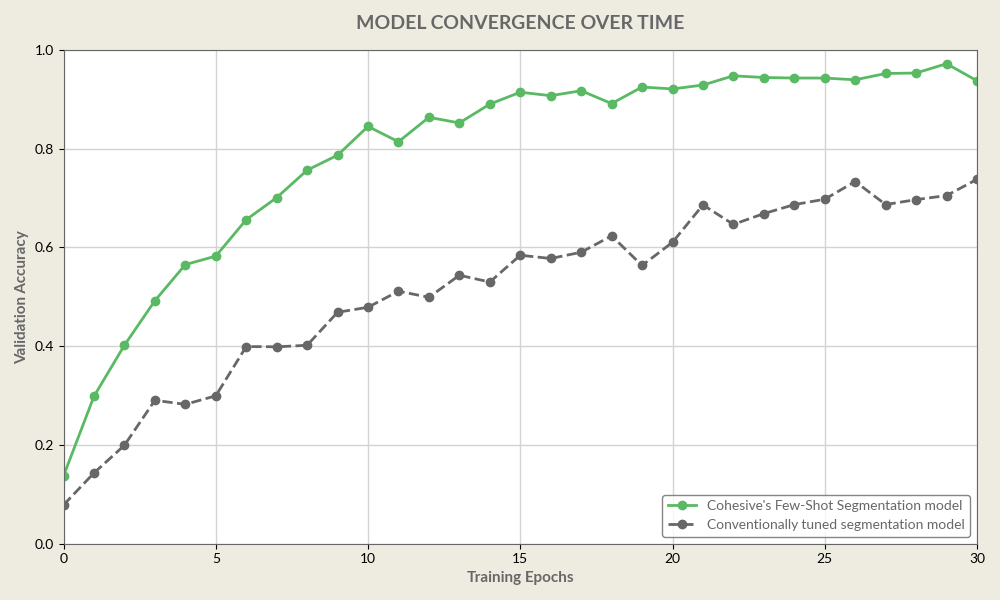
To illustrate the retraining hypothesis, here are graphs showing model performance over training samples and training iterations.

Turning High-Mix Complexity into a High-Margin Advantage

The recent advances in AI for model training, refinement and adaptability have not just made automation in high-mix environments feasible, they have give our customers a massive operational edge. Facilities running Argus OS have increased production by over 50%, trained their shipping team (workers with zero prior robotics experience) to operate our system completely unassisted and reduced rework and scraps by 90%.

As we deploy more systems, collect more data and tackle more challenging problems our systems only get better over time, making it easier for the operator, quicker to deploy and to boost production. By shifting the complexity from the operator to a self-improving system, we have redefined the relationship between the worker and the machine.

Stay tuned for more information about our Smart Workcells and how Argus OS is revolutionizing manufacturing.

ABOUT THE AUTHOR

Enjoyed this read?

Stay up to date with the latest Cohesive Robotics news, automation strategies, and insights sent straight to your inbox!

Almost done! Check your email to verify signup.
Oops! Something went wrong. Please try again.